Can a screenless band have GPS? Connected vs built-in, explained
Updated 5 min readBy Screenless Bands
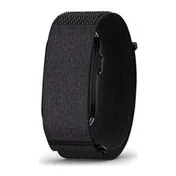
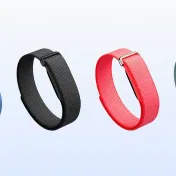
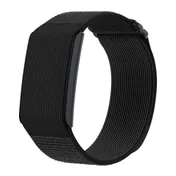
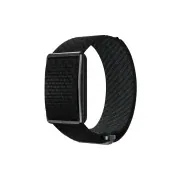
Short version: no. Every screenless band we track — Garmin CIRQA, Amazfit Helio Strap, WHOOP 5.0, Google Fitbit Air and Polar Loop — uses connected phone GPS rather than its own receiver. That is a deliberate design trade, and understanding what it costs you is more useful than a spec-sheet checkmark.
How we know this. GPS behaviour is taken from the manufacturer specifications and professional reviews cited on each product page. The battery comparison is generated from our product data; the diagnostic checklist is our own. As an Amazon Associate, Screenless Bands earns from qualifying purchases; commissions never change a ranking.
The difference in one paragraph
Built-in GPS means the wearable contains its own satellite receiver and can record a route with the phone left at home. Connected GPS means the wearable asks your phone for position over Bluetooth and stitches it to the workout. The band contributes heart rate and motion; the phone contributes the map.
The consequence that matters. Any accuracy question about your route is a question about your phone — where you carried it, how good its receiver is, whether it held a fix. It is not a measure of the band's sensor quality, and reviews that conflate the two will mislead you.
Why no screenless band includes it
A GPS receiver is one of the most power-hungry components in a wearable, and battery life is the entire pitch of this category. Here is what the five bands claim, against what they weigh:
| Band | Claimed battery | GPS | Weight |
|---|---|---|---|
| Garmin CIRQA | Up to 10 days | Connected phone GPS | 21 g |
| Amazfit Helio Strap | Up to 10 days | Connected phone GPS | 20 g |
| WHOOP 5.0 | 14+ days | Connected phone GPS | 26.5 g |
| Google Fitbit Air | Up to 7 days | Connected phone GPS | 12 g |
| Polar Loop | Up to 8 days | Connected phone GPS | 29 g |
Those numbers exist partly because there is no screen and partly because there is no satellite receiver running during workouts. Adding built-in GPS would attack both the battery claim and the small, light form factor that makes a band worth wearing 24/7 — which is the actual product.
It is worth noting that battery claims are not free either. Garmin documents that CIRQA's Battery Saver disables heart rate, activity detection and Pulse Ox, which in turn removes sleep, stress, VO₂ max and intensity-minute calculations. A power-saving mode that stops collecting data is not a usable everyday setting.
What connected GPS means in practice
This is not a theoretical caveat. In a 5K comparison of the Garmin CIRQA, a reviewer found plausible heart-rate data but an overestimated GPS route — because CIRQA was using the reviewer's phone. The correct reading is that the phone produced a poor track, not that the band has a bad sensor.
The same dependency appears everywhere else. On Fitbit Air, outdoor routes rely on the paired phone, so accuracy depends on where the phone is carried and its reception. On the Helio Strap there is no built-in GPS and outdoor mapping uses the phone. On Polar Loop, connected routes use phone GPS.
What you are actually giving up
- Live pace and splits on your wrist. There is no screen, so there is nothing to look at mid-run regardless of where the GPS lives.
- Phone-free running. You can still record heart rate, duration and motion, but not a route or reliable outdoor distance.
- Consistency between runs. A phone in a jacket pocket, a waist belt and an armband will not produce identical tracks, so week-to-week distance comparisons carry more noise than a watch would.
Your route looks wrong: a checklist
Before concluding a band is faulty, work through this in order. In our experience of the reported failure modes, the cause is almost always further up this list than people assume.
- Did the workout start manually? Automatic detection begins after a delay, so the opening minutes — and the route with them — can simply be missing.
- Where was the phone? Move it from a pocket against your body to an armband or waist belt and repeat the same route.
- Did the phone have a fix before you started? A cold satellite fix takes time. Waiting a few seconds outdoors with the app open produces a cleaner opening kilometre.
- Was it one bad run or a pattern? Repeat a course you have measured before. A known route tells you far more than comparing one workout against a friend's watch.
- Is the distance error proportional or fixed? A consistently long track suggests GPS noise being integrated as movement; a missing chunk suggests a dropped connection or a late start.
- Only then, check the band. If heart rate is also implausible, the problem is not GPS at all — see our wrist versus bicep guide.
Who should buy something else
Be honest about which of these you are. Two of the four should not buy in this category at all.
- You already run with your phone. Connected GPS costs you nothing. This is most people, and the category is a good fit.
- You mostly train indoors. GPS is irrelevant and the screenless trade is pure upside.
- You want live pace, splits and running dynamics. No screenless band does this. WHOOP is explicit that there is no built-in GPS and conventional running detail is limited; runners wanting live pace, maps, splits or running dynamics still need a phone or a watch.
- You want to leave the phone behind. Buy a GPS watch. Nothing in this category solves it.
One on-band exception is worth knowing. CIRQA has a physical button that can launch one user-selected activity without reaching for the phone. It adds no GPS, but it removes the most irritating part of a phone-dependent workflow — and, per the checklist above, starting manually is the single highest-value habit for route quality.
What we could not verify
- We have not benchmarked connected GPS across phones. Doing so properly would mean testing each band against several handsets on a surveyed course; our sources test one phone at a time.
- Battery figures are manufacturer claims. Independent reports for CIRQA ranged from an easy week with daily sport to ten days with about 20% remaining, and Helio Strap owners commonly report eight to ten days. Your result depends on Bluetooth use, connected GPS, workout time and optional sensors.
- Water-resistance ratings are not swim-accuracy ratings. A 5 ATM or WR30 rating describes survival, not whether heart rate is usable in the water.
Frequently asked questions
Does any screenless fitness band have built-in GPS?
None of the five major screenless bands does. Garmin CIRQA, Amazfit Helio Strap, WHOOP 5.0, Google Fitbit Air and Polar Loop all use connected phone GPS.
Is connected GPS accurate?
It is as accurate as your phone. One 5K comparison of the Garmin CIRQA found an overestimated route because the band was using the reviewer’s phone for positioning, which is a phone result rather than a sensor result.
Can I track a run without carrying my phone?
You can record heart rate, duration and motion, but not a route or accurate outdoor distance. If leaving the phone behind matters, a GPS watch is the right category.
Why do screenless bands skip GPS?
A satellite receiver is power-hungry and bulky. Removing it is a large part of why these bands claim seven to fourteen-plus days of battery in a 12–29 g package.
Does battery saver mode help during long workouts?
Not usefully on Garmin CIRQA. Garmin documents that Battery Saver disables heart rate, activity detection and Pulse Ox, which also removes sleep, stress, VO₂ max and intensity-minute calculations.