Best fitness tracker for mechanical-watch wearers
Updated 5 min readBy Screenless Bands
The double-wrist look is why a lot of people quit fitness tracking. A screenless band solves it literally: there is no display competing with your watch, and several are light enough that you stop noticing them. The specification that decides this is not weight, which everyone quotes, but body width — so that is what this guide compares.
How we know this. Weights and dimensions are the figures quoted in each product review. The size table is generated from that data and sorted by weight; the wear-position and vibration columns state plainly where our sources are silent. As an Amazon Associate, Screenless Bands earns from qualifying purchases; commissions never change a ranking.
The pick: Google Fitbit Air
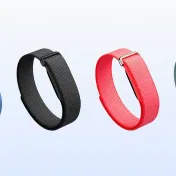
The Google Fitbit Air is the easiest recommendation here and it is not close on physical specs. The sensor alone weighs 5.2 g and the complete textile-band setup about 12 g, making it noticeably slimmer and lighter than every major rival. The 17 mm body is particularly friendly to small wrists and to sleep.
Owner feedback matches the numbers: the most repeated positive from Air owners is that it disappears on the wrist and finally lets them wear an analog watch again. At $99.99, with core tracking that does not require Premium, it is also the cheapest way to find out whether you will tolerate wearing anything at all.
Weight and width, compared
Weight is the number people quote; width is the one that decides whether a band reads as a second watch. Air's 17 mm body sits at one extreme, and the 27 mm bodies of CIRQA and Polar Loop at the other — a 59% difference in the dimension your eye actually notices.
| Band | Weight | Body width | Vibration | Upper-arm option |
|---|---|---|---|---|
| Google Fitbit Air | 12 g with band | 17 mm | Yes — vibration motor | Not documented |
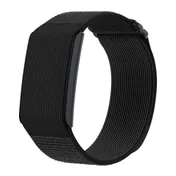
| Amazfit Helio Strap | 20 g | 24.3 mm | Not documented in our sources | Yes |
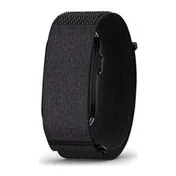
| Garmin CIRQA | 20.7–21.2 g | 27 mm | Not documented in our sources | Yes |
| WHOOP 5.0 | Approx. 26.5 g | 24 mm | Not documented in our sources | Yes |
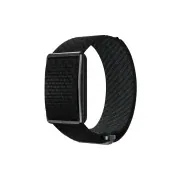
| Polar Loop | 29 g | 27 mm | No vibration | Not documented |
If you have a smaller wrist, take the CIRQA figure seriously. Reviewers found the pod may fit poorly below a 6.5-inch wrist, and on smaller wrists it can lose sensor contact as the pod bridges the wrist curve. That is a comfort problem and a data-quality problem at the same time.
Three questions that decide this for you
The category is small enough that a short decision tree beats a scoring matrix.
1. Will you wear it on your dominant hand?
If your watch stays on your non-dominant wrist, the tracker goes on the dominant one — and that costs you something. Among Polar Loop owners, several mechanical-watch wearers like the quiet form factor but wish right-wrist and dominant-hand accuracy were easier to accommodate. A tracker on your dominant hand sees more incidental movement, which affects step counts and automatic detection more than it affects heart rate.
2. Would you rather not use your wrist at all?
Then leave it. Both the Amazfit Helio Strap and the Garmin CIRQA have an official upper-arm option, and WHOOP 5.0 is comfortable, screenless and wearable in multiple locations. Upper-arm placement removes the aesthetic conflict completely and, as covered in our wrist versus bicep guide, tends to produce better heart-rate data during hard efforts. This is the option most watch wearers overlook.
3. Do you need it to buzz?
See the section below — this is the specification most likely to disappoint after purchase.
The specification people forget: vibration
A screenless band cannot show you anything, so its only channel back to you is a buzz. Not all of them have one.
Fitbit Air includes a vibration motor. Polar Loop does not — and it also lacks consumer SpO₂ and built-in GPS. Without vibration, Loop cannot deliver the discreet haptic prompt some buyers specifically want from a silent tracker: no alarm on the wrist, no inactivity nudge you can feel in a meeting.
Our sources do not document the haptics of CIRQA, Helio Strap or WHOOP 5.0 either way, which is exactly why the size table above says "not documented" rather than guessing. If a silent alarm is the reason you are buying, confirm it on the manufacturer page before you order — and note that CIRQA owners have reported early firmware and alarm bugs, so "has an alarm" and "has a reliable alarm" are separate questions.
What you gain: the nights your watch misses
Most mechanical watches come off at night, which is exactly when a tracker earns its place. Sleep is the clearest reason to buy Air: reviewers praise its comfort, sleep-stage presentation, restlessness data and editable sleep windows. In a week-long comparison against WHOOP, Air was competitive but missed about an hour on one night — a good illustration of why trends matter more than any single score.
Polar's framing is the most scientific of the group. Sleep Plus Stages combines wrist movement and beat-to-beat intervals, Nightly Recharge separates autonomic nervous system recovery from sleep charge, and SleepWise estimates how sleep will support alertness and suggests a sleep gate. Reviewers value the depth, though some found brief awakenings overcounted.
All of it depends on one thing: actually wearing the device. Because these bands are light and have no glowing display, compliance is excellent — which is the real reason a screenless band collects better long-term data than a smartwatch you take off at 10 pm.
What we could not verify
- Width figures come from different sources. Some manufacturers quote a full three-dimensional sensor size and others quote band width; we use the figure each review states and label the column as body width rather than implying a single standard.
- Vibration is documented for two bands only. Fitbit Air has a motor and Polar Loop does not. For the other three our sources are silent, and we would rather say so than infer it.
- Comfort is personal. Wrist size, skin sensitivity and sleep position vary more than these devices do. Both Google and reviewers recommend drying the band and skin after water or sweat, which matters more for 24/7 wear than for a watch you remove.
- We have not measured these devices ourselves. Weights and dimensions are manufacturer and reviewer figures, clearly labeled as such throughout our reviews.
Frequently asked questions
What is the lightest screenless fitness tracker?
The Google Fitbit Air at about 12 g including the band, with a 5.2 g sensor and a 17 mm body. The Amazfit Helio Strap is next at 20 g, followed by Garmin CIRQA at 20.7–21.2 g, WHOOP 5.0 at about 26.5 g and Polar Loop at 29 g.
Can I wear a fitness band on my dominant hand?
Yes, though several Polar Loop owners note right-wrist and dominant-hand accuracy is harder to accommodate. A dominant-hand tracker sees more incidental movement, which affects step counts and automatic workout detection.
Which screenless bands can be worn on the upper arm?
Garmin sells an upper-arm band for CIRQA, Amazfit offers an official upper-arm accessory for the Helio Strap, and WHOOP 5.0 is designed to be worn in multiple locations.
Do screenless fitness bands vibrate?
Not all of them. Fitbit Air has a vibration motor and Polar Loop has no vibration, so Loop cannot deliver silent alarms or haptic inactivity prompts. Our sources do not document haptics for the other three bands.
Which band is narrowest on the wrist?
Google Fitbit Air, at a 17 mm body width. Garmin CIRQA and Polar Loop are widest at 27 mm.
The bands referenced in this guide
 Google Fitbit Air reviewBest for comfort · 8.5/10 · $99.99 over three years
 Amazfit Helio Strap reviewBest value · 8.8/10 · $99.99 over three years
 Garmin CIRQA reviewBest overall · 9.1/10 · $199.99 over three years
 Polar Loop reviewBest for Polar users · 7.9/10 · $199.99 over three years
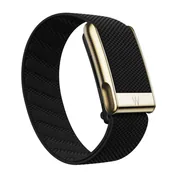 WHOOP 5.0 reviewBest coaching · 8.6/10 · $597 over three years