Google Fitbit Air vs
Polar Loop
Fitbit Air is a tiny mainstream wellness tracker; Polar Loop is a quieter extension of an athlete-focused platform. The $100 reference-price gap buys Polar ecosystem depth, not a universally better experience.
Compared across our 34-criterion editorial checklist using public manufacturer documentation, independent testing and labeled owner signals. This is an evidence synthesis, not an original laboratory test. Read the full methodology →
Choose Fitbit Air for comfort, price and simple passive tracking. Choose Polar Loop when structured training already lives in Polar Flow and you want recovery continuity without wearing a Polar watch overnight.
As an Amazon Associate I earn from qualifying purchases. Links are sponsored, cost you nothing extra and never influence scores or winners. Prices can change on Amazon.
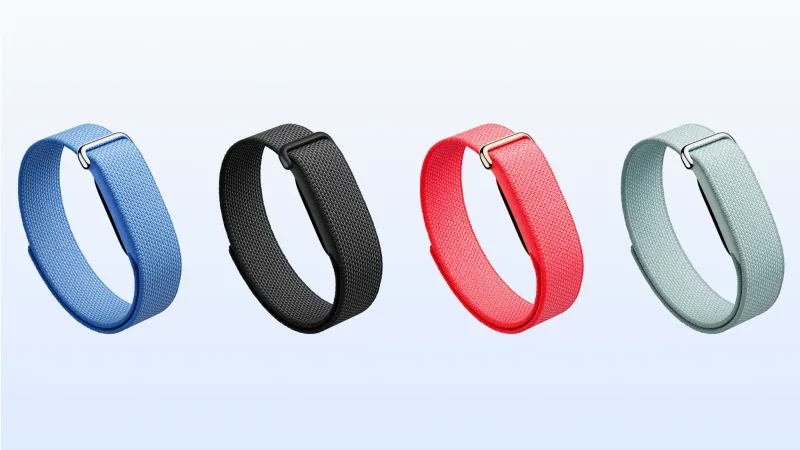
Google Fitbit Air
8.5/10Comfort-first buyers and simple everyday wellness tracking
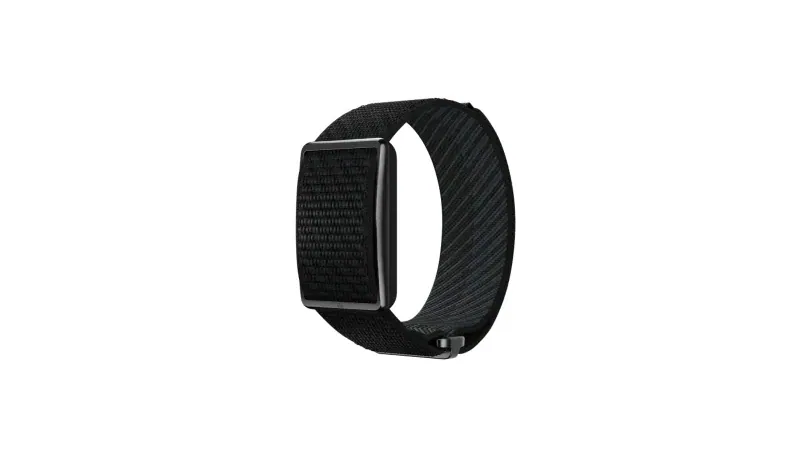
Polar Loop
7.9/10Existing Polar users wanting silent recovery and activity tracking
The decision at a glance.
These winners reflect the specific use case—not affiliate commission. A category can favor one band even when the overall recommendation favors the other.
Design, comfort and controls
Fitbit Air is the easiest of these bands to forget on the wrist. Its 12 g weight and low-profile loop favor sleep and everyday use, though it offers fewer placement choices and no physical workout control. Polar Loop is deliberately silent: no screen, button or vibration. That makes it unobtrusive, but it also pushes deliberate workout control to the phone and offers fewer alternative wearing positions.
Health, recovery and sleep
The emphasis is approachable wellness: steps, sleep, heart rate, readiness and cardio load. It offers fewer athlete-facing layers than Garmin or WHOOP, which is an advantage for users who do not want a dense dashboard. Nightly Recharge, Sleep Plus Stages and SleepWise are coherent for users who already trust Polar’s recovery language. The hardware does not chase every consumer wellness signal, notably leaving out a headline SpO₂ or temperature proposition.
Workouts and training
Automatic detection and connected GPS cover casual exercise well. Serious interval, strength or multisport users will find fewer specialized tools and should not expect a screenless replacement for a GPS sports watch. Polar Flow supplies credible training history and Training Load Pro, but Loop is best treated as a passive companion rather than a complete replacement for a Polar sports watch or chest strap.
Apps, integrations and data
Google’s health experience is easier to scan than Garmin Connect or Zepp. Android integration is a strength, while the lack of direct Apple Health support is an important limitation for iPhone-centered buyers. Polar Flow is deep and consistent across Polar hardware. Its interface feels more traditional than WHOOP or Google’s health experience, but experienced Polar athletes benefit from one continuous training record.
Price and long-term ownership
Core tracking works after the one-time purchase. Premium is optional, so the buyer can ignore it, but some deeper guidance and historical presentation may depend on the current service offer. There is no required subscription, so ownership cost is predictable. Its purchase price is harder to justify for newcomers when Helio and Fitbit are cheaper, but existing Polar history changes that calculation.
All 34 criteria.
Manufacturer specifications are labeled as claims. Editorial conclusions synthesize the existing reviews and product documentation; they are not presented as new laboratory measurements.
| Criterion | Google Fitbit Air | Polar Loop |
|---|---|---|
| DESIGN & COMFORT | ||
| Comfort for 24/7 wear | The lightest option here at about 12 g with band. | Soft screenless band, but the heaviest of this group at about 29 g. |
| Weight | 12 g with band | 29 g |
| Screen and distractions | No display or notification surface | No display, button or vibration |
| On-device controls | Passive tracking; phone handles setup and review | Automatic tracking; app starts deliberate sessions |
| Water protection | Water resistant to 50 m | Suitable for swimming |
| Placement options | Wrist-focused with interchangeable loops | Primarily wrist-based |
| BATTERY & CHARGING | ||
| Claimed battery life | Up to 7 days (manufacturer claim) | Up to 8 days (manufacturer claim) |
| Charging method | Proprietary charger; device is removed | Device removed for proprietary charging |
| Wear while charging | No | No |
| HEALTH & RECOVERY | ||
| Continuous heart rate | Continuous optical HR for everyday tracking | Polar Precision Prime optical HR |
| HRV | Overnight HRV trends | Nightly Recharge uses autonomic nervous system signals |
| Blood oxygen | Blood-oxygen trends where supported | No prominent consumer SpO₂ feature |
| Skin temperature | Skin-temperature variation | No prominent consumer skin-temperature feature |
| Stress and recovery | Readiness and cardio-load context | Nightly Recharge and training-load context |
| Sleep tracking | Sleep score, schedule, stages and breathing trends | Sleep Plus Stages, Nightly Recharge and SleepWise |
| Nap tracking | Automatic sleep-session detection; nap presentation may vary | Less nap-centric than Garmin, Zepp or WHOOP |
| Steps and daily activity | Strong everyday steps and activity focus | Daily activity and inactivity guidance |
| WORKOUTS & TRAINING | ||
| GPS and route tracking | Connected phone GPS; no onboard GPS | Connected phone GPS; no onboard GPS |
| Workout modes | General exercise tracking and automatic detection | Phone-started sport profiles in Polar Flow |
| Automatic workout detection | Automatic activity recognition | Continuous activity tracking; deliberate sport sessions rely more on the app |
| Training load and readiness | Cardio Load and Readiness rather than deep multisport planning | Training Load Pro inside Polar Flow |
| Strength training | General workout logging; less specialized than Garmin, Helio or WHOOP | Sport-profile logging without WHOOP-style muscular-load modeling |
| Heart-rate broadcasting | Not positioned as a universal HR broadcast sensor | Best considered within Polar’s own sensor/watch ecosystem |
| Coaching | Simple wellness guidance; deeper extras may sit in Premium | Structured Polar training context, less conversational coaching |
| APP & INTEGRATIONS | ||
| App clarity | Clean daily wellness emphasis | Structured athlete dashboard with an older visual hierarchy |
| App depth | Good health history, lighter structured-training depth | Strong training history and Polar ecosystem continuity |
| Apple Health | No first-party direct Apple Health integration | Apple Health integration for supported fields |
| Google Health Connect | Strong fit with Google Health Connect | Health Connect support on compatible Android setups |
| Strava | Strava connection for supported activities | Mature Strava integration |
| Data export | Google account/Takeout export options | Training-session export in common formats and account export tools |
| PRICE & OWNERSHIP | ||
| Required subscription | Optional Premium; core tracking works without it | Not required |
| Upfront cost | $99.99 reference price | $199.99 reference price |
| Estimated three-year cost | $99.99 without optional Premium | $199.99 before accessories |
| Best fit | Comfort-first buyers and simple everyday wellness tracking | Existing Polar users wanting silent recovery and activity tracking |
Ownership estimates exclude taxes, sales, replacement bands and optional services. WHOOP pricing assumes renewal at the stated $199 annual reference rate; verify the current Amazon offer before purchasing.
Make the choice by behavior.
The better band is the one whose app, charging pattern and cost model you will tolerate for years—not the one with the longest feature list.
Google Fitbit Air
- + Lightest and most sleep-friendly
- + Low one-time purchase price
- + Simple wellness presentation
- + Strong Android health integration
Polar Loop
- + Strong Polar Flow continuity
- + No required subscription
- + Good sleep and recovery framework
- + Predictable long-term cost
Fitbit Air or Polar Loop?
Fitbit Air is the better first screenless band for most people. Polar Loop should be chosen primarily by existing Polar users who value Flow continuity over minimum weight and price.